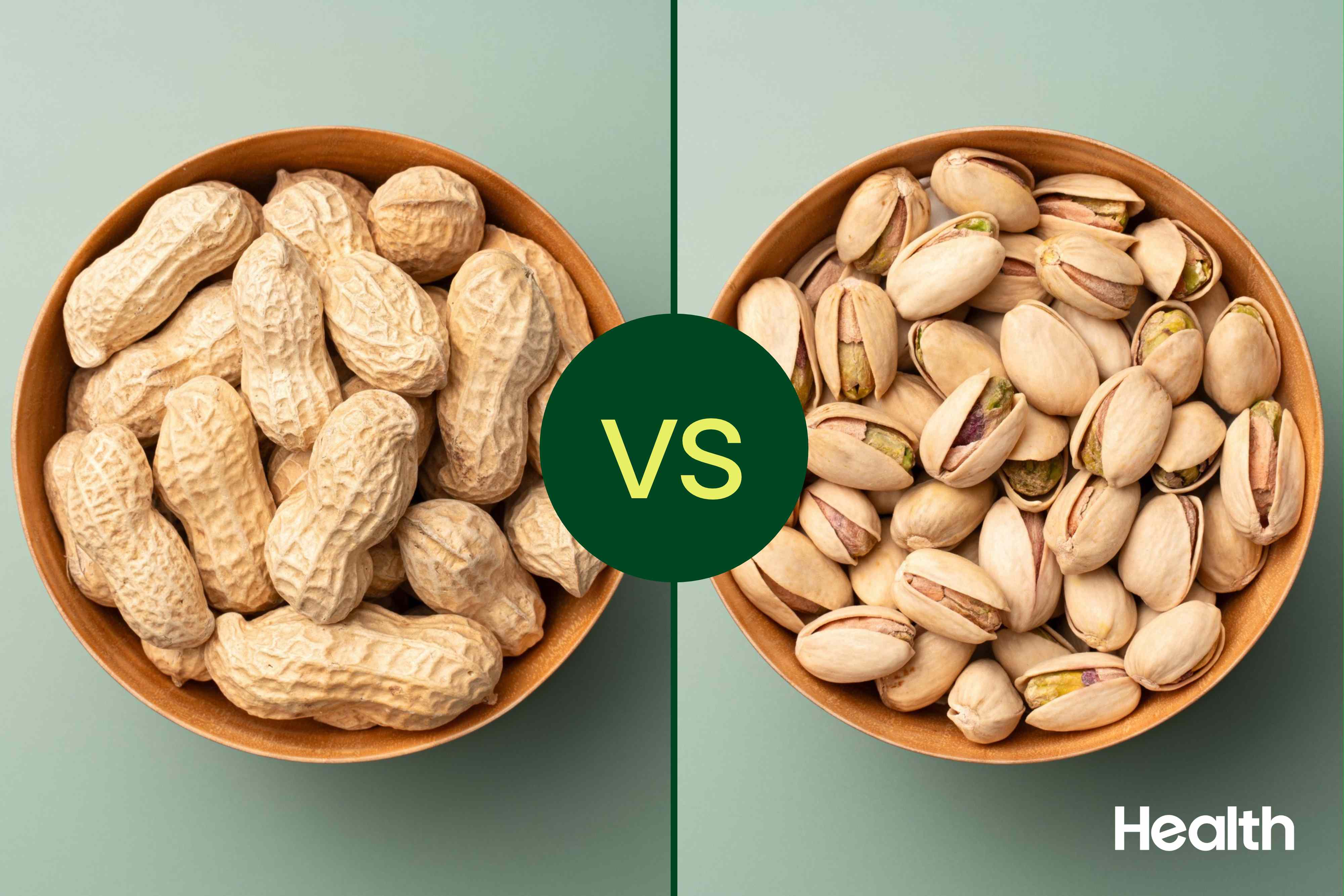
Pistachios vs. Peanuts: Which Is Better for Protein and Fiber?

Lindsey DeSoto, RDSat, October 10, 2026 at 11:00 AM UTC

Why this matters: Peanuts and pistachios are both nutrient-dense snacks, but their small nutritional differences may make one a better fit depending on whether you want more protein or fiber.
What you can do: Choose peanuts for slightly more protein or pistachios for slightly more fiber, and opt for unsalted varieties when possible.
The payoff: Making either nut a regular part of your diet can help you get more plant-based protein, fiber, and heart-healthy unsaturated fats.
If you’re looking for a filling, nutrient-packed snack, peanuts and pistachios are both great options. They each provide plant-based protein, fiber, and healthy fats, making them an easy way to add more nutrients to your day.
But if you’re standing in the snack aisle trying to decide between the two, you may wonder if one is actually healthier. While their nutrition profiles are similar, peanuts have a slight edge in protein, while pistachios provide a little more fiber.
Peanuts Are Better for Protein
Both peanuts and pistachios provide plant-based protein. If you’re choosing between the two strictly for protein quantity, grab the peanuts. A one-ounce serving of dry-roasted, unsalted peanuts has about 7.3 grams of protein, compared with about 5.7 grams in the same amount of pistachios.
When it comes to protein quality, pistachios have the edge. They’re a complete protein, meaning they provide adequate amounts of all nine essential amino acids your body can’t make on its own. Peanuts contain all nine, too, but are low in some, so they aren’t considered a complete protein.
Eating a variety of protein foods throughout the day can help you get enough of each amino acid.
Pistachios Are Better for Fiber
Pistachios have slightly more fiber than peanuts—about 3 grams per ounce versus 2.4 grams. Still, the difference is small, and either nut can help you get more fiber.
Fiber helps keep you regular and can also help lower cholesterol and manage blood sugar. Adults need about 21 to 38 grams a day, depending on age and sex, but most don’t get enough.
Nutritional Comparison
Here’s how peanuts and pistachios compare per one-ounce serving.
Nutrients per 1 oz (28 g)
Pistachio nuts, raw
Peanuts, raw
Calories
159
161
Protein
5.7 grams (g)
7.3 g
Total Fat
12 g
13.9 g
Carbohydrates
7.7 g
4.6 g
Dietary Fiber
3 g
2.4 g
Magnesium
34.3 milligrams (mg), or 8% Daily Value (DV)
47.6 mg, or 11% DV
Phosphorus
139 mg, or 11% DV
107 mg, or 9% DV
Vitamin B6
0.48 mg, or 28% DV
0.1 mg, or 6% DV
Folate
14.5 micrograms (mcg), or 4% DV
68 mcg, or 17% DV
Vitamin E
0.81 mg, or 5% DV
2.36 mg, or 16% DV
Peanuts and pistachios have a very similar calorie content, and most of the fat in both comes from heart-healthy unsaturated fats.
Peanuts have more magnesium, folate, and vitamin E. Your body needs magnesium for healthy muscles and nerves and folate to make new cells. Vitamin E helps protect cells from damage.
Pistachios stand out for vitamin B6, which helps your body use protein and supports immune function. They also have slightly more phosphorus, a mineral your body needs for bones and energy.
Beyond the nutrients in the table, both nuts provide antioxidant compounds called polyphenols that protect cells from damage. Pistachios also contain an antioxidant called lutein, which is important for eye health.
Is One Truly Healthier Than the Other?
Neither is a clear winner. Peanuts have a little more protein, while pistachios have a little more fiber. Choose the one you like, or keep both around. Regardless of which you buy, here are a few things to consider:
Salt: Plain, unsalted nuts have no added salt. Salted and boiled peanuts can have quite a bit, so check the sodium on the package.
Shells: The one-ounce serving in the table is for edible nuts. If you buy pistachios in-shell, use the serving size on the label to gauge how much you’re eating.
Flavors: Honey-roasted nuts contain added sugar, while some savory flavors add a lot of sodium. The Nutrition Facts label will tell you how much is in each serving.
on Health
Source: Lifestyle


0 Comments